Agentic AI for Science
Multi-agent LLM systems that automate complex, real-world data analysis, especially in AI for science.
- Virtual bioinformaticians for genomics (GenoMAS, GenoTEX)
- Statistical understanding and efficiency of multi-agent systems and test-time scaling
Computational Biology
We study computational biology because every advance has the potential to free millions from suffering.
- Gene regulatory structure from spatial and single-cell transcriptomics
- Genetic basis of complex traits, especially Alzheimer's disease and cancer
Trustworthy & Secure AI
Defending LLM-driven AI against dangerous uses, and making models robust to spurious signals.
- Jailbreak attacks and defenses, prompt injection, content-moderation guardrails
- Visibility and ranking in LLM-based search and generative engines (CORE)
- Robust and generalizable machine learning
We also build open software so that domain experts can use our methods without technical barriers. For the full publication record, see the publication page or Google Scholar.
Recent News
- Papers accepted at NeurIPS 2026, ICML 2026 (including a spotlight on security–fidelity tradeoffs in prompt-injection defense), ICLR 2026, ACL 2026, COLM 2026, CVPR 2026, MICCAI 2026, EACL 2026, AAAI 2026, AIES 2026, and PSB 2026.
- I joined the Beckman Institute for Advanced Science and Technology, and also the Interdisciplinary Health Sciences Institute, as affiliated faculty.
- I served as general chair, with Ruqi Zhang (Purdue), of the Midwest Machine Learning Symposium (MMLS 2026) at Purdue University. MMLS 2026 drew 231 registrations from 33 institutions, with 176 participants checking in on site and 94 posters presented. 78% of registrants were students or postdocs, and 92% came from Midwest institutions. [Website]
- We released TopCited AI, a generative engine optimization (GEO) platform that helps brands get recommended and cited by AI-powered search engines and large language models such as ChatGPT, Gemini, and Grok.
- We released Heelo, an execution layer for AI agents: a unified API that lets agents handle real-world tasks such as placing orders, booking travel, sending outreach, and posting to social media, without complex agent loops or browser automation.
- Our EACL 2026 paper on audio narrative attacks against large audio–language models was covered by Quantum Zeitgeist.
- Our InfoFlood jailbreak research was covered by 404 Media, POLITICO, IT Brew, and the Illinois News Bureau.
- I gave a talk at the NIH CFDE meeting, "Spatially Varying Cell-specific Gene Regulation Network Inference".
- We received the Outstanding Paper Award at the FL@FM Workshop, NeurIPS 2024, for "ZOOPFL: Exploring Black-box Foundation Models for Personalized Federated Learning".
- Invited talk at NIH/NLM, "Towards LLM-Based Exploration of Gene Expression Data in Alignment with Bioinformaticians". [Slides]
- Talk at the Stanford AI+Health Seminar, "Understanding Structural Patterns for Early-Diagnosis of Alzheimer's Disease". [Slides]
- We gave a tutorial on Trustworthy Machine Learning at KDD 2023. [Overview]
- I gave a tutorial on Trustworthy ML for Biomedical Computing at the IEEE International Conference on Healthcare Informatics. [Slides]
- Our paper "Efficiently leveraging multi-level user intent for session-based recommendation via atten-mixer network" received the Best Paper Honorable Mention at WSDM 2023.
- I started as an Assistant Professor at the School of Information Sciences, UIUC.
- We presented learning robust and invariant representations with data augmentation at KDD 2022. [Slides] [Poster]
- We presented toward learning human-aligned robust models at UAI 2022. [Poster]
- We released Robustar, GUI software that helps users identify spurious features. [Video] [Code] [Paper]
- We presented The Two Dimensions of Worst-case Training and the Integrated Effect for OOD Generalization at CVPR 2022. [Poster]
- We presented Gene Set Prioritization Guided by Regulatory Networks with p-values through KMM at RECOMB 2022. [Slides] [Software]
- I was recognized as one of the top 50 AI+X Rising Young Scholars by Baidu Research.
- I defended my thesis, Toward Robust Machine Learning by Countering Superficial Features, at the Language Technologies Institute, CMU. [Slides]
Our new npj Dementia research is released today
— Haohan Wang (@HaohanWang) September 29, 2026
Two Alzheimer's patients can share a diagnosis and still carry very different genetic stories. Our new npj Dementia paper builds a genetic profile for each patient and finds a hidden AD subgroup with markedly worse memory 🧠🧬
The… pic.twitter.com/Tl5CVoDz99
- Security is Task Dependent: The Security–Fidelity Tradeoff in Prompt Injection Defense — Amazon-Illinois Center on AI for Interactive Conversational Experiences (AICE), UIUC
- Agentic AI for Genomic Science: Understanding the Mechanism of Thousands of Diseases at One Time — Computational Microbiome Lecture Series, University of Oklahoma
- Curse of Universarial Approximation — Guest lecture, UIUC
- Practical Concerns of Prompt Injection in Deployed Language Models — Capital One (virtual)
- Agentic AI for Genomic Science: Understanding the Mechanism of Thousands of Diseases at One Time — Data Science Lecture, William & Mary (virtual)
- Large Language Model-based Data Science Agent — ResearchTrend.AI (virtual)
- Detecting and Neutralizing Prompt Injection via LLM Activation Monitoring — AICE Center, UIUC
- Toward Agentic AI Scientist for Biomedical Discovery — Tsinghua University (virtual)
- Large Language Models Struggle in Induction, and Reasoning Makes It Worse — ProSem Lecture Series, iSchool, UIUC
- Spatially Varying Cell-specific Gene Regulation Network Inference — NIH Common Fund Data Ecosystem (CFDE) Meeting, Bethesda
- Toward Agentic AI Scientist for Biomedical Discovery — "Generative AI and the Future of Research" CIRSS Speaker Series, UIUC
- GenoAgent: LLM-Based Exploration of Gene Expression Data in Alignment with Bioinformaticians — NAIRR Pilot, Washington, D.C.
- Toward Agentic AI Scientist for Biomedical Discovery — Reading Group, Australian National University (virtual)
- AI Powered Transformations in Finance: Toward Underwriting Automation — Southwestern Ohio Winter Meeting, Cincinnati
- Guardian of Trust in Language Models: Automatic Jailbreak and Systematic Defense — Computer Science Seminar, University of Illinois Chicago (virtual)
- Towards LLM-Based Exploration of Gene Expression Data in Alignment with Bioinformaticians — NIH/NLM (virtual)
- Understanding Variations in Regulatory Networks Across Cell Types through Transformer Model with Knowledge on Regulatory Interactions — Genetics and Epigenetics Cross-Cutting Research Team Meeting, NIDA, NIH, Bethesda
- Technical Advances of Jailbreaks — Analytics Lunch & Learn, Protiviti (virtual)
- Guardian of Trust in Language Models: Automatic Jailbreak and Systematic Defense — Trustworthiness of Large Language Models, CS@Virginia Tech (virtual)
- A Team of AI-made Scientists from LLMs for Scientific Discovery from Transcriptomics — EMBL-EBI Workshop on LLMs for Biology, Boston
- Guardian of Trust in Language Models: Automatic Jailbreak and Systematic Defense — AI Talks (virtual)
- Guardian of Trust in Language Models: Automatic Jailbreak and Systematic Defense — Large Language Model Reading Group, UIUC
- Advancing Precision Medicine: Tailored Genomic Insights and AI-Driven Automation in Complex Disease Research — Computer Science Department, UIUC
- Advancing Precision Medicine: Tailored Genomic Insights and AI-Driven Automation in Complex Disease Research — Biostatistics & Medical Informatics Seminar, University of Wisconsin–Madison
- Deep Learning Methods to Navigate Heterogeneous Data Landscapes for Genetic Insights — Spatial Genomics Seminar, Carl R. Woese Institute for Genomic Biology, UIUC
- Guardian of Trust in Language Models: Automatic Jailbreak and Systematic Defense — VALSE: Vision and Learning Seminar (virtual)
- Understanding Structural Patterns for Early-Diagnosis of Alzheimer's Disease — Stanford AI+Health Seminar (virtual)
- Role Playing to Improve the Trustworthiness of Large Language Models — Champaign-Urbana Data Science User Group
- Tutorial on Trustworthy Machine Learning — ACM SIGKDD 2023, Long Beach, CA
- Robust Machine Learning Techniques Help Understand Alzheimer's Disease Subtypes — HealthX Club, Shanghai Jiao Tong University (virtual)
- Tutorial on Trustworthy Machine Learning for Biomedical Challenges — IEEE ICHI 2023, Houston, TX
- Robust Machine Learning with Big Models — Halil Lab, iSchool, UIUC
- Toward a Principled Understanding of Trustworthy Machine Learning Methods — Xia Peisu Young Scholars Forum, Institute of Computing Technology, Chinese Academy of Sciences (virtual)
- Causality and Multiple Aspects of Trustworthy Machine Learning — Keynote, TrustLOG Workshop at CIKM, Atlanta
- Toward the Alignment Between Machine Learning Models' and Users' Perceptions of Data — Champaign-Urbana Data Science User Group
- Toward a Principled Understanding of Robust ML and Its Connection to Multiple Aspects — Doctoral ProSeminar, iSchool, UIUC
- Toward a Principled Understanding of Robust Machine Learning Methods and Its Connection to Multiple Aspects — MLNLP Seminar Series (virtual)
- Trustworthy AI-diagnosis of Alzheimer's Disease from MRI — CNS Lab, Stanford University (virtual)
- A Principled Understanding of Robust Machine Learning Methods — RIKEN Center for Advanced Intelligence Project, Japan (virtual) [Slides]
- Robust Computer Vision Techniques Help Identify Subtypes of Alzheimer's Disease — Department of Biomedical Informatics Colloquium, University of Pittsburgh
- Robust Machine Learning with Emphasis on Countering Spurious Features — Data Science Initiative, Brown University (virtual)
- High-frequency Component Helps Explain the Generalization of CNN — Aggregate Intellect (virtual) [Slides]
- Towards Trustworthy Machine Learning Inspired by High-frequency Image Data — R-Pad Meeting, Robotics Institute, Carnegie Mellon University (virtual)
- Towards Trustworthy Machine Learning for Scientific Discovery — Doctoral Symposium, ACM Conference on Health, Inference, and Learning (virtual)
- A Brief Overview of Trustworthy Machine Learning — Probabilistic Graphical Models lecture, Carnegie Mellon University
- Learning Deconfounded Representations through Neural Networks, with Applications in Genetic Data — Center of Excellence for Computational Drug Abuse Research, Pittsburgh
- Dealing with Confounding Factors with Deep Neural Networks — Next Generation in Biomedicine Symposium, Broad Institute, Boston
- Deep Learning over Heterogeneous Data — Department of Biomedical Informatics Colloquium, University of Pittsburgh
- Learning Robust Representations by Projecting Superficial Statistics Out — Machine Learning Lunch Seminar, Carnegie Mellon University
Speaking & Collaboration
I am available to give keynotes, invited talks, seminars, tutorials, and panel discussions, in person or virtually, for academic, industry, and policy audiences. I have given nearly 50 invited talks and tutorials, hosted by NIH, the NAIRR Pilot, Stanford, Tsinghua University, the Broad Institute, EMBL-EBI, and Capital One. I also welcome research collaborations. To invite me to speak or to propose a collaboration, email haohanw at illinois.edu.
Talk topics
- Agentic AI scientists for biomedical discovery: LLM agents that analyze genomic data at the scale of thousands of diseases
- LLM jailbreaks and prompt-injection defense: how aligned models fail, and the security–fidelity tradeoff in defending them
- How AI search decides what to recommend: ranking and visibility in LLM-based search and generative engines
- Spatial gene regulation and disease genetics: machine learning for regulatory networks and Alzheimer's disease heterogeneity
- Trustworthy machine learning: robustness, generalization, and spurious features (tutorials at KDD 2023 and IEEE ICHI 2023)
Collaboration directions
- Agentic AI: new multi-agent architectures (reusable agent primitives, KV-cache communication between agents), efficient test-time scaling, agents that keep learning from their sources, and AI scientists that run discovery end to end
- Trustworthy & secure AI: jailbreaks and red teaming across text, vision, and audio; prompt-injection defense for deployed agents; and how LLM-based search and generative engines rank and recommend content
- Computational biology: virtual bioinformaticians that analyze thousands of diseases at once, gene regulation from spatial and single-cell data, and shared genetic architecture across Alzheimer's disease, autism, and other complex diseases
- Tools for real-world impact: platforms that put these methods in users' hands, such as Heelo, TopCited AI, and MyDataPilot
To invite a talk or discuss a collaboration, email haohanw at illinois.edu.
Awards, Teaching & Service
Selected Awards
- Outstanding Paper Award, FL@FM Workshop at NeurIPS 2024
- Best Paper Honorable Mention, WSDM 2023
- Nominated for the KDD Dissertation Award by the CMU School of Computer Science, 2022
- Rising Star as Young Investigator in AI+X, Baidu Research, 2022
- Youth Outstanding Paper Award, World Artificial Intelligence Conference, 2020 and 2021
- Next Generation in Biomedicine, Broad Institute of MIT and Harvard, 2019
- Baidu Fellowship Finalist, 2019
- Student Paper Award, IEEE BIBM 2017
Research Support
Our work is supported by the National Institutes of Health, the NAIRR Pilot, the Amazon-Illinois Center on AI for Interactive Conversational Experiences (AICE), the Beckman Institute, Microsoft, US Bank, the Illinois Soybean Association, and Standing Up to POTS.
Teaching at UIUC
- IS 507: Data, Statistical Models, and Information (Fall 2023, 2024, 2025)
- IS 557: Applied Machine Learning Team Projects (Spring 2023, Fall 2026)
- IS 597: Trustworthy Machine Learning (Spring 2024, 2025, 2026)
Professional Service
- General Chair (with Ruqi Zhang), Midwest Machine Learning Symposium 2026: 231 registrations from 33 institutions, 94 posters
- Area Chair: NeurIPS 2026; ICML 2024, 2025, 2026; ACL 2025; AAAI SPC 2024–2025
- Editor: Scientific Reports; Transactions on Machine Learning Research
- Review panelist for NIH and NSF; NSF–NIH Joint Workshop on Emerging AI in Biology
- Workshop organizer: DCAI at WWW 2024; Trustworthy ML at CIKM 2024
- Mentor: NIH CFDE summer program; Deep Learning Indaba; UIUC Bolashak Data Science Program
About Me
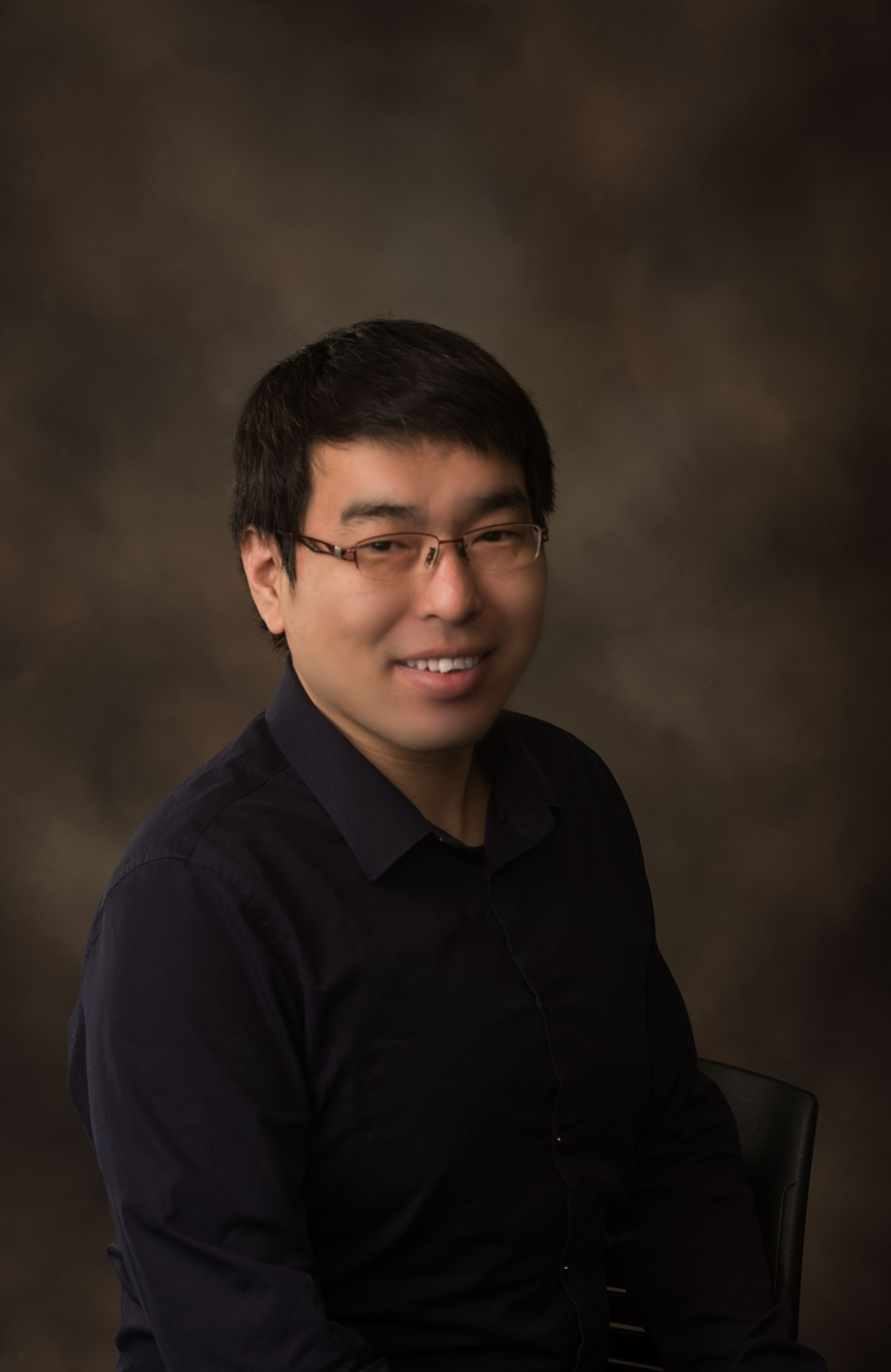
Haohan Wang is an Assistant Professor in the School of Information Sciences at the University of Illinois Urbana-Champaign, where he leads the DREAM Lab. He is also an affiliated faculty member of the Siebel School of Computing and Data Science, the Carl R. Woese Institute for Genomic Biology, the Beckman Institute for Advanced Science and Technology, the Interdisciplinary Health Sciences Institute, and the National Center for Supercomputing Applications.
His research develops AI methods for scientific discovery. His group builds agentic AI systems that automate complex genomic data analysis, computational methods that recover gene regulatory structure from spatial and single-cell transcriptomics and explain the genetic basis of complex diseases such as Alzheimer's disease, and techniques that make large language models robust and secure against jailbreaks and prompt injection.
Wang received his Ph.D. (2021) and M.S. (2015) from the Language Technologies Institute at Carnegie Mellon University, where he worked with Professor Eric Xing. Before joining Illinois in 2022, he was a postdoctoral researcher in the Machine Learning Department at CMU. In 2019, the Broad Institute of MIT and Harvard recognized him as one of the Next Generation in Biomedicine for his work on handling confounding factors with deep learning.
The Chinese spelling of his name is 汪浩瀚.